Kate Calvert does some research
According to a north London school head, 42% of independent school pupils in the UK now have exam access dispensations of one kind of another. He went on to say that what increasingly appears to be a rapid growth in neurodiversity is something schools are having to address.
As some TPP parents are all too well aware, it is not something state schools are keen on. If a child is diagnosed with an issue, state schools are legally obliged to address it. But funding cuts mean they don’t have the means to do that. The solution many adopt is not to assess the child. Parents can force the issue by paying for a private assessment, but it’s expensive. Meanwhile, the child struggles, and many go undiagnosed.
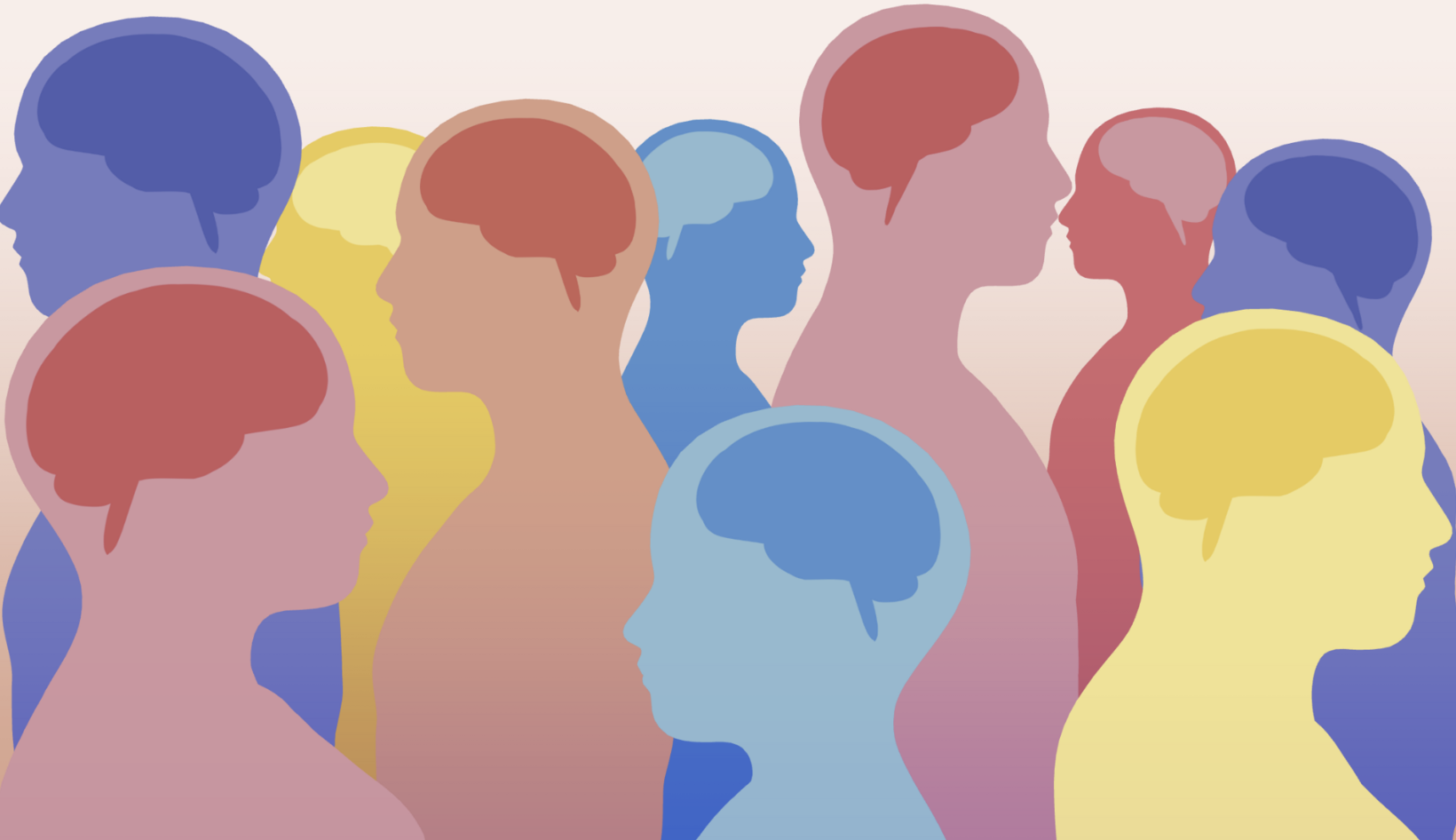
However, while schools may be ambivalent, workplaces are waking up to neurodiversity, and its potential strengths. A recent presentation for a multi-national noted that all the term neurodiversity really indicates is that the brain processes information in a different way, estimating that it applies to around one in seven people in the UK.
The presentation reports as most common types (potentially with overlaps):
- Autism 1-2% of the population
- ADHD – Attention Deficit Hyperactivity Disorder – around 3-4%
- Dyscalculia (issues around numbers) – around 3%, though 60% of those with dyslexia also have number difficulties
- Dyslexia – around 10%
- Dyspraxia or Developmental Coordination Disorder (DCD) around 10%, with 2% severely affected
Issues with limited working memory and lack of ability to visualise (the mind’s eye) may form part of these or be additional.
An estimated 50% of neurodiverse people are unaware of it and it is much more widely diagnosed in boys than girls, it is thought because girls are better at developing masking techniques. It seems likely that neurodiversity is much more widespread than currently acknowledged, at least in the adult population. It might just be that, rather than there being a norm from which a minority differs, we may all just be at different points on a wider spectrum.
There does appear to be an inherited component. If you suspect your child is neurodiverse you could check out a couple of soft markers for family members. Is there confusion between left and right? Do people know immediately where eg the letter P comes in the alphabet, or do they have to run through the sequence to check?
What Does Neurodiversity Look Like In Practice?
As the book, the Gift of Dyslexia explains, there are many advantages to not thinking in a ‘conventional’ way. Not least is the ability to find solutions other people can’t spot. As another head teacher commented – in a village, understanding how to get the wall attached back to the barn made you the most valuable member of the community.
‘Official’ positives of neurodiversity are listed as:
- Creativity
- Visual and spatial reasoning
- Hyper focus
- Passion
- Entrepreneurship
- An eye for detail
- Introspection
- Innovation
- Great listening
- Questioning
- Imagination
- Resilience
- Acceptance
- Loyalty
Difficulties you might see, potentially overlapping include:
- Problems reading words and numbers
- Problems reading from a blackboard/whiteboard
- Inability to sit still
- Difficulty finding the way from place to place
- Impulsivity
- Trouble engaging with something which feels irrelevant or pointless – which can look like obstinacy, but isn’t
- Difficulty with stress, potentially easily losing their temper
- Disorganisation/losing stuff/forgetting important tasks
- Working memory issues so eg trouble with mental maths (but able to calculate using pen and paper) or difficulty following a sequence of instructions – ‘Go to the red box, take out the glue pens and give them to the children on the table by the window,’ or for adults, ‘Go to the roundabout, take the third exit, drive to the pub on the corner and look for the wooden cabin’.
- Exhaustion from attempting compliance with what seems to be the norm (look out for explosions at the end of the school day suggesting a child using every ounce of energy trying to do as asked)
- Potentially sadness or even depression because of apparently failing – and wanting to fit in
- Acting up/clowning to distract from what finding too hard
Is This All For Real?
In The Age of Diagnosis: Sickness, Health and Why Modern Medicine Has Gone Too Far, Suzanne O’Sullivan notes that 50 years ago autism was said to affect four in 10,000 people. Today worldwide it is said to be one in 100 and the UK diagnoses increased 787% between 1998 and 2018.
ADHD diagnoses, a term dating to 1987, doubled in boys and tripled in girls between 2000 and 2018, and is increasingly applied to adults. O’Sullivan comments, ‘It could be that borderline medical problems are becoming ironclad diagnoses and that normal differences are being pathologized.’ Some would argue with that and point to potential triggers including the potential impacts of pollution, fast food, electro smog and social media, but it’s worth bearing in mind.
What can we do as parents?
Children obviously manage better if they feel understood and it can be good to remember (and mention) is that it is rare to find a successful entrepreneur who is not considered neurodiverse – Richard Branson for example – and creative jobs, from architecture to garden design to song writing feature a disproportionate number of neurodiverse people. This type of brain is not less capable – just different.
Good diet and regular exercise are of course helpful. There are also a bunch of techniques which can help with managing practicalities – establishing a daily routine with steps like prepping clothes for the day, mind maps to help clarify thoughts on a topic and how they link together, Post-It notes on the bedroom mirror as reminders, colour coding to emphasise important points, songs to help remember key information (eg the alphabet song). Not all of them work for everyone, but they are worth trying to see if any take.
And it can help to accept and even welcome obsessions – Lego, football cards, all the lyrics to Frozen… in quality not so different from those obsessed with concert level piano playing or competitive swimming – just less applauded.
And imagine how boring a world would be made up of only the likes of Olympic level athletes and brilliant musicians. We need a bit of everything to make society more resilient.
………………………………………………………………………………………………………………………………
Resources
The Gift of Dyslexia by Ronald D Davis is printed to make it readable by dyslexics or is available as an audio book.
Tony Buzan’s books, particularly Mind Maps for Kids, may be helpful.
The Dyslexia Association is at www.bdadyslexia.org.uk/
The National Autistic Society is at www.autism.org.uk and a specialist magazine is www.autismparentingmagazine.comwhile www.autism-alliance.org.uk is a coalition of support organisations.
https://adhduk.co.uk is a support group for those with ADHD
The late Dr Stephen Humphries at www.youtube.com/playlist?list=PL8NLzSreQddcV61R7EUb1pyftaeuEj4AB) describes adult ADHD, offering some insights.
Titles on dyslexia are listed at www.goodreads.com which under the heading neurodiversity also recommends books on autism and ADHD.
Any other recommendations please email magazine@tufnellparkparents.org and we’ll run them on the News page.